What Causes Circuit Breakers to Trip and How to Fix It Safely
June 29, 2026

You are halfway through reheating dinner, the microwave humming and the coffee maker going, when the kitchen goes dark with a sharp click from the garage. You walk over, find the panel, and there it is: one switch sitting halfway between on and off. You flip it back, the lights return, and ten minutes later it happens all over again. The short answer is that your breaker is doing exactly what it was built to do. It is cutting power on purpose because something on that circuit is pulling more current than the wire can safely carry, or because two wires are touching that should never meet.
That distinction matters more than anything else you will read here. A breaker that trips once after you ran three heavy appliances at the same time is a very different problem from a breaker that trips the instant you reset it with nothing plugged in. After opening hundreds of panels across San Diego County, we can tell you the cause is almost always one of four things, and most you can narrow down yourself in about ten minutes.
What to Do the Moment Your Breaker Trips
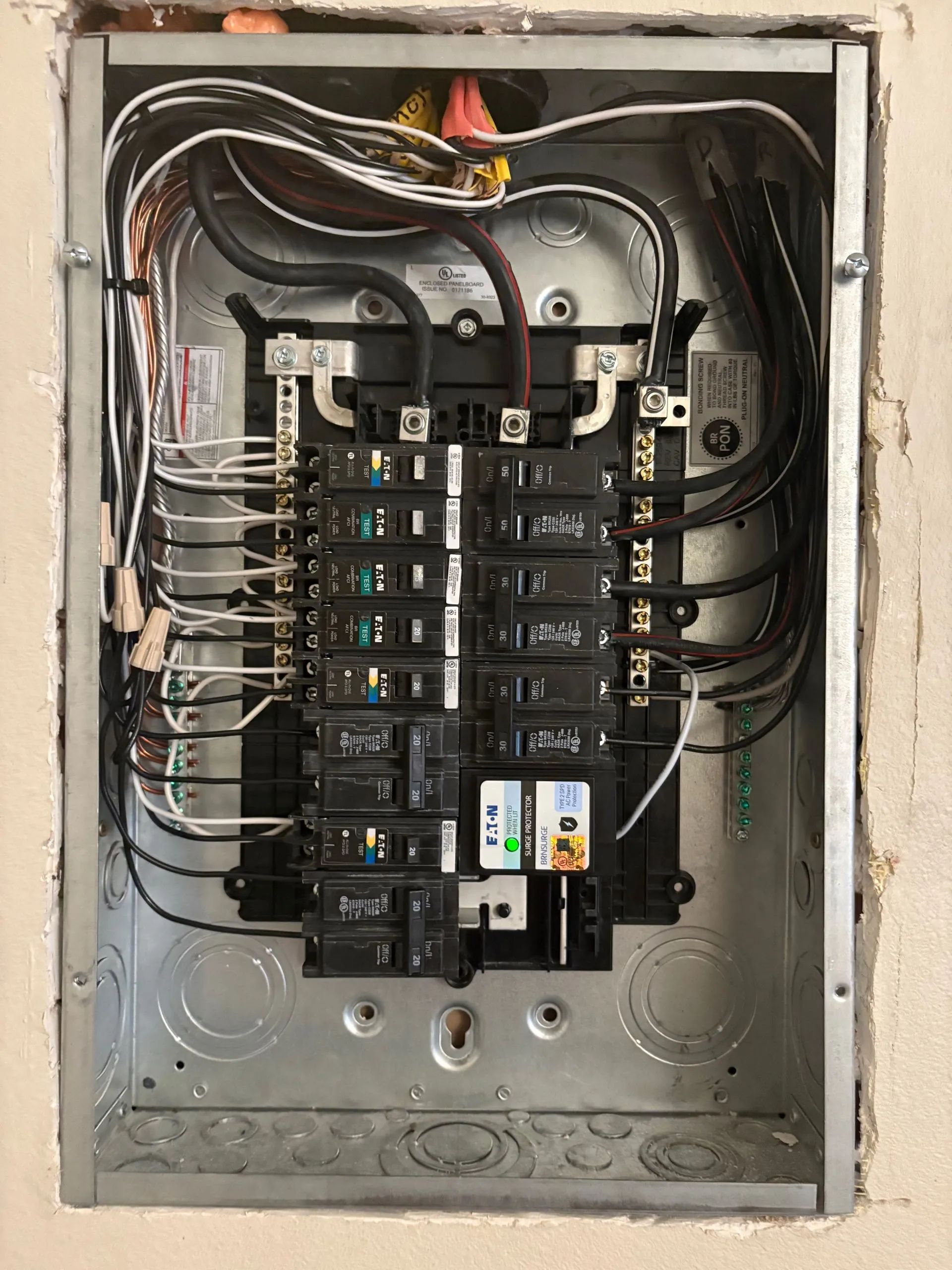
- Find the tripped breaker. It sits in the middle position, not fully off, while the others stay firmly on.
- Turn off or unplug everything on that circuit, whatever was running when power dropped.
- Push the breaker fully off, then firmly back on. A half reset will not hold.
- If it holds with nothing drawing power, plug devices back one at a time until it trips. That last device is your culprit.
- If it trips again with the circuit empty, stop. You likely have a wiring fault, not a load problem.
WARNING: If you smell burning, see scorch marks around the breaker, or feel heat coming off the panel cover, do not reset it again. That means a connection is arcing inside the panel, and another reset can start a fire. Leave it off and call a licensed electrician.
TIP: Before you touch anything, write down what was running when power dropped. Nine times out of ten that note tells us whether you have an overload or a fault.
Why Your Breaker Actually Trips
Most repeat trips trace back to overload, and it is the easiest to confirm. Every circuit is rated for a set amount of current, usually 15 or 20 amps in a home. Inside the breaker is a small bimetallic strip that warms as current passes through it. Pull too much for too long and that strip bends just enough to release the switch. A space heater plus a microwave on one line is a classic overload, and the fix is spreading the load.
A short circuit is the louder version. When a hot wire touches a neutral directly, current spikes instantly and a magnetic mechanism snaps the breaker open in a fraction of a second, usually with a pop. Damaged cords, a cracked outlet, or a chewed wire behind a wall are common sources, and this is not a DIY reset job.
Ground faults are similar but involve a hot wire touching a grounded surface or a wet outlet. Bathrooms, garages, and outdoor receptacles use GFCI protection that trips on the smallest leak to keep you from a shock. Moisture is the usual trigger, which matters a great deal in our climate.
Then there is the breaker wearing out. A switch that has tripped hundreds of times over fifteen or twenty years fatigues internally and begins tripping at lower and lower loads. We see this constantly in older homes still on the original panel.
How We Track Down the Real Cause
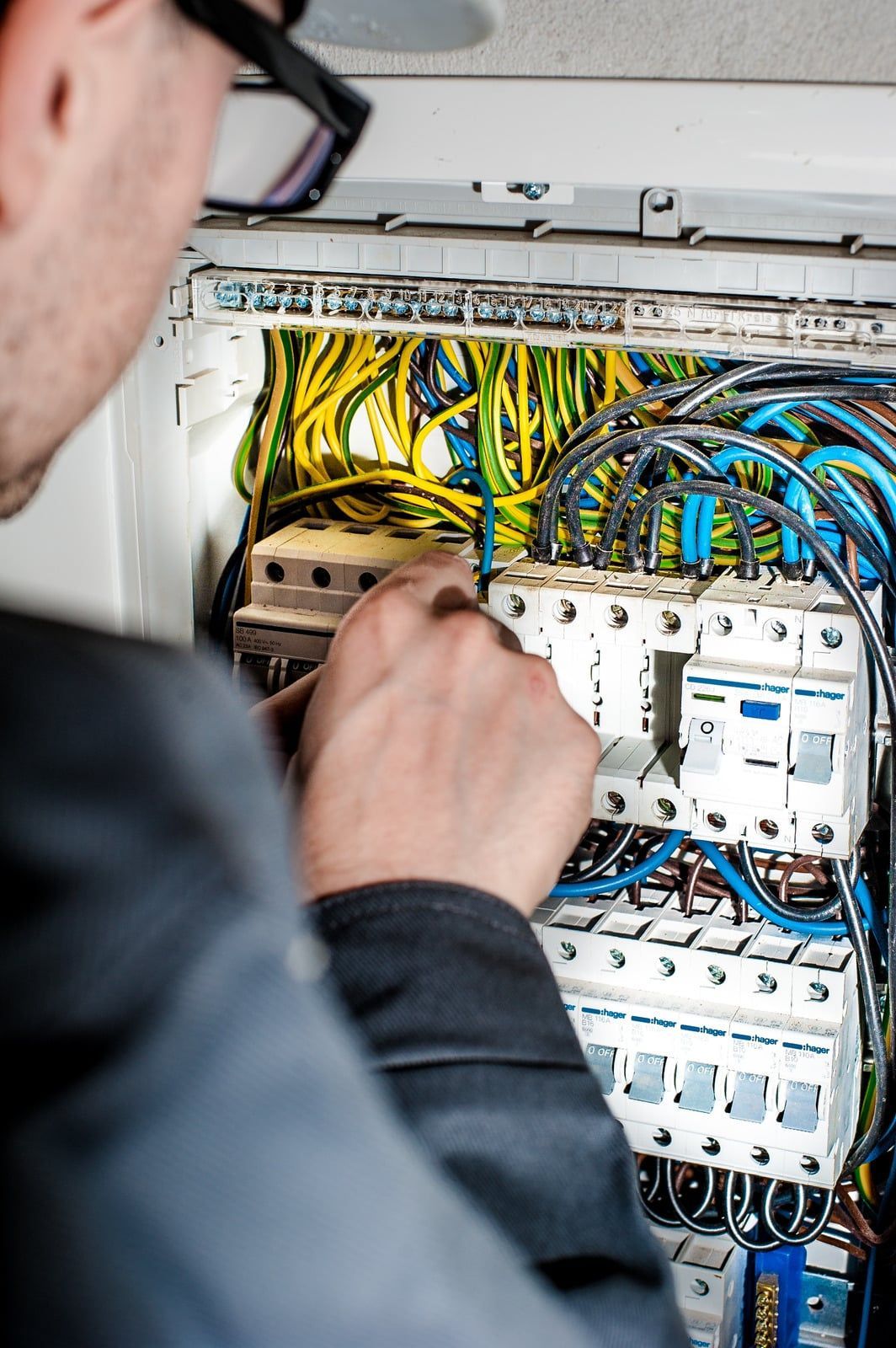
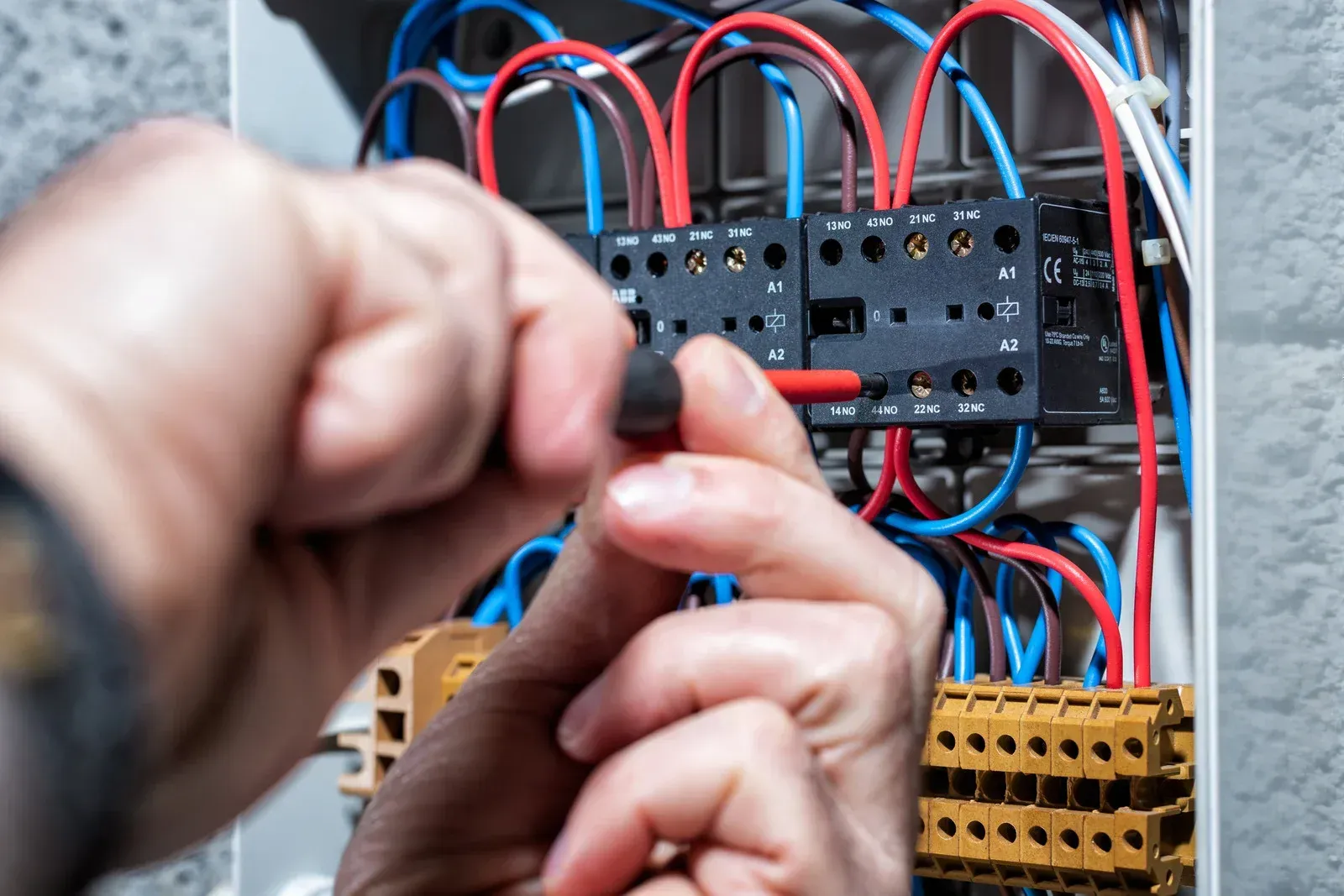
We reach first for a clamp meter, which reads how much current a circuit draws without disconnecting anything. If a 15 amp line sits at 14 amps under normal use, the cause is no mystery. From there we open outlets and boxes along the run to look for loose terminals, scorched insulation, and connections that worked themselves free over the years.
On service calls we frequently find the breaker is innocent and one warm connection is feeding the whole problem. We also test the breaker under load, because one that gives out at 9 amps on a 15 amp circuit is finished and needs replacing.
Fixing It Safely
If you traced the trips to one appliance or a crowded circuit, the fix is in your hands. Move the heavy device to another circuit, retire a failing cord, or stop running two big loads together. That alone resolves a large share of the calls we get.
Anything behind the wall belongs to us. Replacing a worn breaker, chasing a short, tightening connections inside a live panel, or adding a dedicated circuit all carry real shock and fire risk. We strongly recommend against swapping in a higher amp breaker to stop the tripping, which is the most dangerous shortcut homeowners try. A bigger breaker lets the wire overheat before it ever trips, which removes the protection instead of fixing the cause.
Why Escondido Homes Trip Breakers More Often
Our dry inland heat puts a heavy summer load on panels that were never sized for modern cooling. When afternoon temperatures climb and air conditioners and pool pumps run for hours, marginal circuits that behave all winter start tripping by July. Many homes in Escondido still run their original mid century panels, and decades of heat cycling leaves connections loose and breakers tired.
The other local pattern is moisture on outdoor circuits. We get long dry stretches, but irrigation overspray, the occasional hard rain, and damp marine mornings find their way into outdoor outlets and trip GFCI devices that are simply doing their job.
Keeping It From Happening Again
A few habits prevent most repeat trips. Each month, check the panel for any breaker that feels warm or looks discolored, and listen for buzzing. Spread heavy appliances across circuits rather than ganging them on one. Once a year, before the first heat wave, have the panel and its connections inspected, since our summers expose weak points.
Mistakes That Make Breaker Problems Worse
The most common one is resetting a breaker again and again, which feels reasonable because it keeps working for a minute. Every reset on a real fault stresses the wiring further, and repeated arcing damages the panel. Reset once, and if it will not hold, stop and diagnose.
Another understandable mistake is assuming a tripping breaker must be a bad breaker. Most of the time it is fine and is reporting a problem on the circuit. Find what it is reacting to first, then decide whether the breaker needs work.
Mistakes That Honest Electrical Diagnosis From Your Local Escondido Experts
A tripping breaker is rarely the villain. It is a messenger telling you a circuit is overloaded or a wire is faulted, and reading that message in the right order is what separates a ten minute fix from a real hazard. In our dry inland heat, with so many original panels still working summers they were never built for, those warnings deserve attention sooner than most homeowners think.
With 20
years of electrical experience, Panelectric Inc
has helped homeowners diagnose breaker issues safely and accurately, identifying underlying
electrical problems before they turn into costly repairs or serious safety risks. When a breaker will not stay set, or your panel runs warm, reach out to us. We serve homes throughout Escondido, California, and find the real cause rather than just resetting the switch.
Frequently Asked Questions
Why does my breaker trip only when the air conditioner starts?
Motors pull a brief surge of current the moment they start, several times their running draw. On a circuit already near its limit, or with a tired breaker, that short startup spike alone is enough to trip it even though everything runs fine afterward.
Is it safe to keep resetting a breaker that keeps tripping?
Reset it once. If it holds, fine. If it trips again right away, or you smell burning or feel heat at the panel, stop completely. Repeated resets on a real fault stress the wiring and can eventually lead to a fire.
How long does it take to find and fix a tripping breaker?
Simple overloads you can sort out yourself in minutes by moving devices around. A wiring fault or a failing breaker usually takes us a single visit, often an hour or two, once we measure the load and trace the circuit to its source.
Can a tripping breaker mean my whole panel needs replacing?
Sometimes. One worn breaker is a quick swap. But if several breakers fail, the panel runs warm, or it is an aging original unit, that often signals the whole panel is nearing the end of its service life and worth evaluating.
Why do my outdoor outlets trip after I water the lawn?
Outdoor receptacles use GFCI protection that trips at the smallest sign of current leaking to ground. Irrigation overspray and morning damp get into the outlet and trigger it. Drying the outlet and aiming sprinklers away usually clears the problem right up.